
When you set up a Facebook ad campaign, one of the first questions you’ll face is deceptively simple: What’s your objective?
And that’s where many UK businesses go wrong.
Picking the wrong Facebook ad objective is like trying to win a darts match with your eyes closed. You might hit the board — but not the bullseye.
In 2025, Facebook (now Meta) gives you a streamlined yet powerful set of ad objectives. But knowing which one to choose — and why — is the key to making your budget work harder and your results go further.
So if you’ve ever run a campaign and thought, “Why didn’t that work?”, this guide is for you.
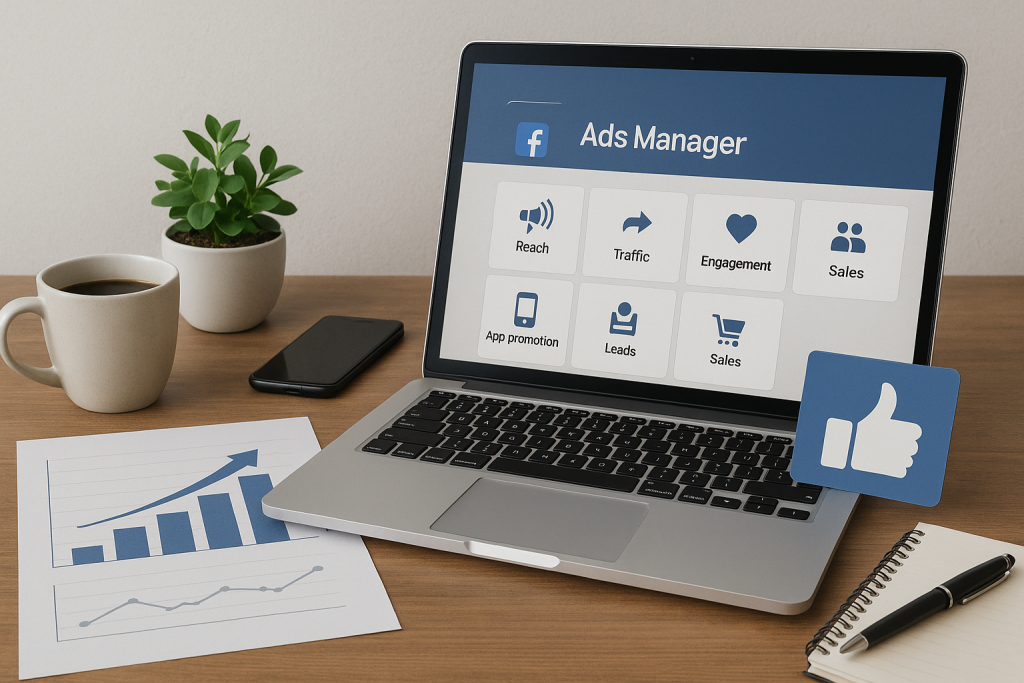
First, What Are Facebook Ad Objectives?
Your ad objective tells Facebook what action you want people to take after seeing your ad. It also tells the algorithm how to optimize delivery, what data to track, and what audience signals to prioritize.
There are 6 primary objective categories inside Meta Ads Manager as of 2025:
- Awareness
- Traffic
- Engagement
- Leads
- App Promotion
- Sales
Each one contains multiple sub-goals, but the main idea is simple: Facebook will try to show your ad to people most likely to take that action — not just anyone who scrolls by.
Objective #1: Awareness — For Building Brand Recognition
Best for: Local UK businesses, new product launches, early-stage startups
If you’re new to the game, or just trying to let people know you exist, Awareness is the starting point.
There are two core types:
- Brand Awareness: Targets users more likely to remember your brand after seeing the ad.
- Reach: Maximizes the number of people who see your ad, regardless of interaction.
In the UK, this works great for regional targeting — say, a salon opening in Manchester or a cafe launching in Brighton. Use this to warm up your audience before asking them to take action.
Just remember: don’t expect direct conversions here. This is top-of-funnel stuff — visibility first, sales later.
Objective #2: Traffic — For Sending Clicks to Your Site
Best for: Blog content, landing pages, appointment booking links
The Traffic objective is all about clicks — sending users to your website, app, or event page.
It works well if:
- You’ve got a fast, mobile-optimized landing page
- You want to drive traffic to lead magnets or blog content
- You’re tracking results with the Facebook Pixel or Conversions API
But be warned: this doesn’t guarantee high-quality leads. Facebook is simply finding people who are likely to click, not necessarily convert.
So use Traffic if your goal is visibility or education — not immediate purchases.
Objective #3: Engagement — For Social Proof and Interactions
Best for: Growing brand trust, increasing page activity, boosting social content
Facebook’s Engagement objective is underrated — especially for UK businesses in competitive niches.
This objective targets people most likely to:
- Like, comment, or share your post
- Follow your page
- Respond to your event
It’s especially useful when running local promotions, contests, or announcements. Engagement builds social proof — the more activity your post gets, the more credible and visible it becomes.
Plus, an engaged audience is easier to retarget later with conversion campaigns.
Objective #4: Leads — For Capturing Contact Info (Fast)
Best for: Service providers, consultants, local trades, B2B businesses
If your goal is to collect leads — phone numbers, emails, form responses — this is the objective built for you.
In 2025, the Lead objective supports:
- Instant Forms (pre-filled, mobile-friendly forms native to Facebook)
- Conversions on your website
- Calls or Messenger chats
Lead Ads are powerful because they remove friction. No need for a separate landing page. And with Facebook’s improved form optimization and CRM integration, it’s easier than ever to qualify leads in real-time.
UK-based home service companies, local agencies, and consultants use this objective to book consultations, schedule quotes, and build email lists — without needing a full sales funnel.
Objective #5: App Promotion — For Mobile-First Brands
Best for: Startups, tech companies, and mobile-first platforms targeting UK users
If your product lives in the App Store or Google Play, this one’s for you.
The App Promotion objective is designed to drive:
- App installs
- In-app actions (like account creation, purchases, or subscriptions)
Meta uses real-time store data to optimize delivery toward high-intent users — not just random downloads. You can target based on device type, OS, connection speed, and even lookalikes of your most active users.
This objective is ideal for:
- Fintech apps
- Fitness and wellness subscriptions
- Food delivery services targeting local UK regions
Pro tip: combine this with video ads or carousel walkthroughs to show how your app actually works.
Objective #6: Sales — For Businesses That Want Purchases, Not Just Clicks
Best for: E-commerce brands, high-ticket digital products, and lead-to-sale funnels
This is Facebook’s most powerful — and often most misunderstood — objective.
The Sales objective tells Meta to optimize for actual purchases or conversion events, like “add to cart,” “checkout initiated,” or “purchase confirmed.”
But here’s the catch: the algorithm needs data. If your Pixel or Conversions API isn’t set up properly, or your funnel doesn’t convert, you’ll end up paying more and seeing less.
UK businesses using the Sales objective well are usually:
- Running retargeting campaigns
- Selling physical or digital products
- Using strong creative backed by social proof
If you’re selling directly from a website or shop, this is your goal — but only after your funnel and data tracking are airtight.
Choosing the Right Objective by Business Type
Here’s a quick cheat sheet for UK businesses deciding which objective to start with:
- Local Services (plumber, tutor, salon):
Start with Leads or Engagement, then retarget with Sales. - E-commerce Stores:
Start with Awareness or Traffic to warm up, then scale with Sales. - Consultants/Agencies:
Leads is your best bet, especially with Instant Forms. - Mobile Apps:
Go straight to App Promotion, with a laser focus on install quality. - New Brands:
Begin with Awareness or Engagement, then build to Sales or Leads over time.
Final Thought: The Objective Shapes Everything
Your Facebook campaign’s success hinges on that first decision: the objective.
It’s not just a setting — it’s a signal to Meta’s algorithm, telling it what you value most. Choose the wrong one, and you’ll waste budget chasing the wrong action. Choose the right one, and your campaign has a fighting chance to thrive — even in the noisy 2025 ad space.
So before you hit “publish,” ask yourself:
What do I actually want people to do — and am I giving Meta the right tools to make it happen?
Let’s Help You Set the Right Objective (and Actually Get Results)
At DigitalMarketingAds.co.uk, we don’t just launch campaigns — we engineer outcomes.
Whether you’re trying to build awareness in Leeds, collect leads in Manchester, or scale an e-commerce funnel nationwide, we help you choose the right objective, set up clean tracking, and build campaigns that don’t just look good — they convert.
- Objective-first campaign strategy
- Full-funnel creative and audience planning
- UK-specific targeting and performance optimization
- Transparent results you can actually understand
👉 Visit www.digitalmarketingads.co.uk and book your free strategy session today. Let’s get your Facebook Ads working — for real this time.
Frequently Asked Questions
1. What’s the main difference between Facebook ad objectives?
Each objective focuses on a specific user action. Traffic drives clicks to your site, Leads collects contact info using built-in forms, and Sales targets purchases or conversions. Choosing the right one helps Facebook show your ads to the people most likely to take that action.
2. What’s the best ad objective for new UK businesses?
If you’re just starting out, Awareness or Engagement is ideal. These objectives help get your brand seen and remembered before asking people to take bigger actions like signing up or buying.
3. Are Lead Ads better than sending people to a website?
They can be — especially on mobile. Facebook’s Instant Forms are quick, easy, and convert well. But if your site is fast and optimized, sending traffic there might give you more flexibility with your messaging and offer.
4. Can I run different objectives in separate campaigns?
Absolutely. Many UK businesses run one campaign for engagement, another for leads, and a third for sales. This lets you target people at different stages of the customer journey.
5. How can I tell if I chose the wrong objective?
If you’re getting clicks but no leads, or views but no sales, your objective might not match your goal. Watch your metrics closely — if results aren’t lining up, it may be time to test another approach.